
How to Get Out of Overdraft (the Minus) in Israel
What living in the minus really costs, why you keep landing there, and a step-by-step plan to get your bank account back above zero and keep it there.
Short answer: being in the minus is a loan you pay interest on every day. To get out, first find your real average overdraft, then make your monthly net balance positive, pay the overdraft down with that surplus (or move it to a cheaper fixed loan), and lower your credit line as you go so you can’t slide back.
Key Takeaways
- Overdraft is expensive credit: up to 11.50% a year on a salary line at Bank Hapoalim, and 16.60% above the approved line (rate notice effective 9 July 2026).
- Bank of Israel data showed households paid 12.7% on overdraft on average in November 2024, against about 9% on consumer loans.
- You can’t fix the minus while you spend more than you earn. A positive monthly net is step one.
- Going over your approved line costs much more than staying inside it.
What living in the minus actually costs
Your overdraft line (misgeret ashrai) is a loan the bank lets you draw on without asking. The bank calculates interest on your debit balance every day, so even a few days a month below zero cost money.
Here is what Bank Hapoalim published as its maximum rates for private accounts, effective 9 July 2026, when the Bank of Israel rate was 3.50% and prime was 5.00% (Bank Hapoalim rate notice):
| Situation | Maximum annual rate | Effective annual rate |
|---|---|---|
| Salary overdraft line, inside the approved limit | 11.50% (prime + 6.50) | 12.01% |
| Any amount above the approved limit | 16.60% (prime + 11.60) | 17.66% |
| Account with no approved line | 16.60% (prime + 11.60) | 17.66% |
Other banks publish similar notices, and every rate moves with prime (the Bank of Israel rate plus 1.5 points). These are maximums, so your own rate may be lower. Check your bank’s app or ask.
For the bigger picture, Bank of Israel data showed Israeli households owed NIS 9.75 billion in overdraft at the end of November 2024, at an average rate of 12.7%. The average rate on consumer loans was about 9% (Times of Israel, January 2025).
A quick example: an average overdraft of ₪10,000 at 11.50% costs roughly ₪1,150 a year, almost ₪100 a month, without buying you anything. If part of it sits above your limit, that part costs 16.60%.
Why you keep landing in the minus
Most overdraft isn’t one big mistake. It’s a few small timing problems that repeat every month:
- The card bill arrives before the salary. Your credit card is charged on one fixed day for a whole cycle of purchases. If that day comes before payday, you dip below zero every month. See how the credit card billing date affects your budget.
- Installments pile up. Each purchase in payments looks small, but together they take a fixed bite of every month. See how to budget installments.
- You spend a little more than you earn. Even ₪300 a month over adds up to ₪3,600 a year of new overdraft, plus interest.
Step 1: Find your real number
The balance on the day you look is misleading. It changes a lot around payday and the card billing date. What you need is:
- Your average overdraft. Most bank apps show the daily balance history. Look at a full month and estimate the typical level, not just the lowest point.
- Your approved limit. Note it, and check whether you ever go above it.
- Your monthly net. Income minus expenses for a normal month.
The monthly net is the number that decides everything. If it’s negative, the overdraft will keep growing no matter what else you do.
Step 2: Make your monthly net positive
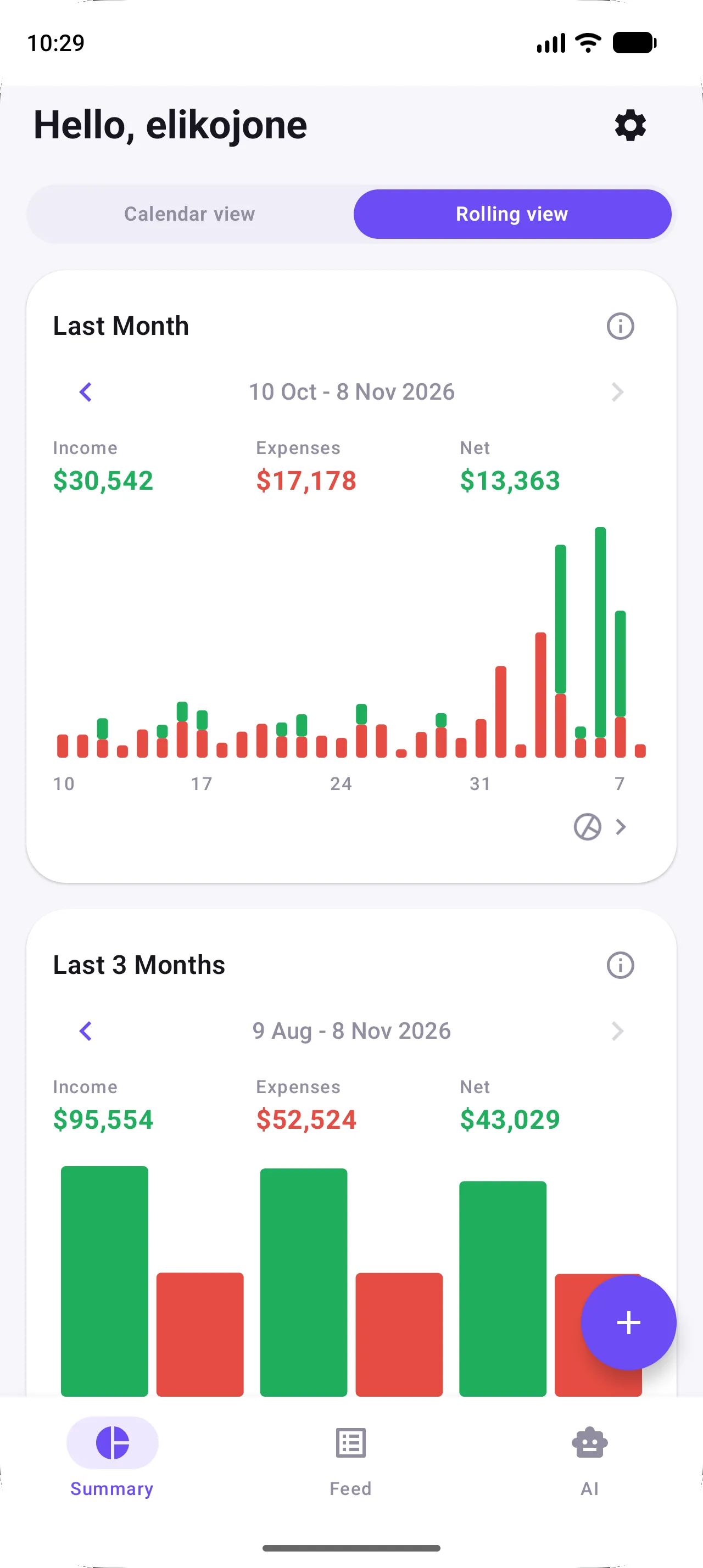
Track every expense for a month. You can do it without connecting your bank: see how to track expenses without connecting your bank. Not sure which app to use? Compare them in the best budget app in Israel. Then look at your net for the month.
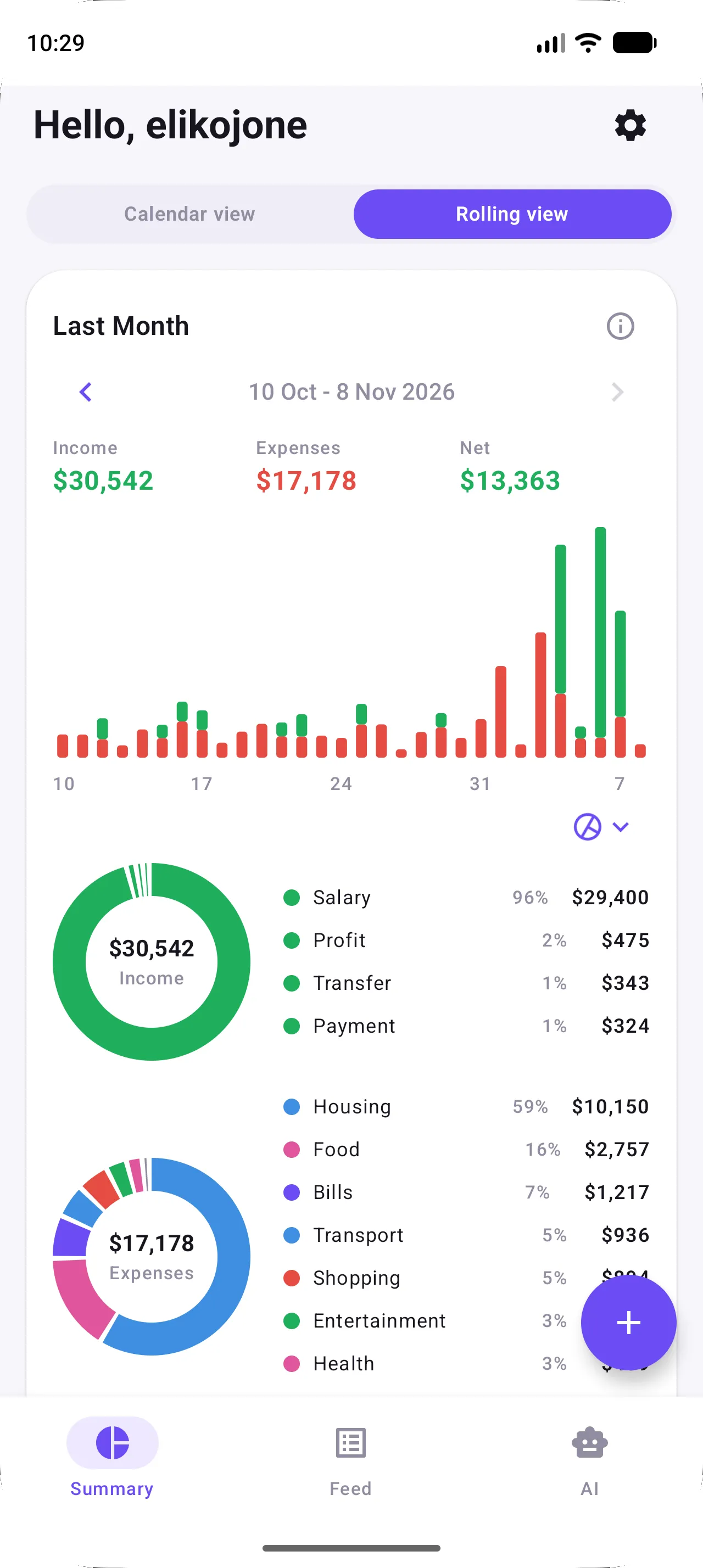
If it’s negative, open your spending by category and pick the one or two biggest flexible ones, like eating out or shopping. Cutting those usually moves the net faster than trimming everything a little. The 50/30/20 rule is a useful check on whether your fixed needs are simply too high for your income.
Step 3: Stop going over the limit
Going above your approved line is the most expensive kind of minus. At Bank Hapoalim’s July 2026 rates, the amount above the limit costs 16.60% instead of 11.50%. If you’re close to the limit, keep a small margin and move non-urgent purchases until after payday.
Step 4: Pay it down, or move it to a cheaper loan
You have two options:
- Pay the overdraft down directly with your monthly surplus. Simple, but nothing forces you to keep going, and the line is always there to spend into again.
- Convert it to a fixed loan. In the Bank of Israel data above, consumer loans averaged about 9% when overdraft averaged 12.7%. A loan also has a fixed monthly payment, so the debt actually shrinks on schedule.
A loan only helps if you stop using the overdraft at the same time. Compare the effective annual rate (ribit efektivit), including fees, before you sign, and ask your bank whether it can lower your current overdraft rate. The published rates are maximums. Have other debts too? Debt snowball vs avalanche shows which to pay first.
Step 5: Lower your limit as you go
Every time you pay down a chunk, ask the bank to reduce your approved line. A smaller limit means less room to slide back, and banks can charge a fee for allocating the line (Bank Hapoalim lists ₪12 a quarter for individuals in the same notice).
Step 6: Build a small buffer
Once you’re at zero, keep going until you have a cushion of a few hundred shekels above zero on your lowest day of the month. That cushion absorbs the card bill and the odd surprise, so you don’t drop back into the minus.
Track it in Japka
Japka doesn’t connect to your bank, so it can’t show your bank balance. What it does show is the part that decides whether the minus grows: your income, your expenses and your net for each month, in the Summary tab. Log every expense for a few weeks, check the net every Sunday, and you’ll see whether you’re actually paying the overdraft down.
Common mistakes
- Looking only at the balance on payday. It looks fine for a day, then drops again. Use the monthly average.
- Taking a loan and keeping the line. You end up paying both.
- Cutting a little everywhere. One or two big categories move the number faster.
- Ignoring installments. They’re fixed commitments for months ahead. Count them before you plan your surplus.
Summary
The minus is expensive, daily-priced credit. Get your monthly net above zero first, then pay the overdraft down or move it to a cheaper fixed loan, stay under your limit, and shrink the line as you go. A small buffer at the end keeps you from sliding back.
FAQ
What does "being in the minus" mean?
It means your current account (osh) balance is below zero and you are using the bank's overdraft line (misgeret ashrai). It is a loan, and the bank charges interest on it every day you are below zero.
How much interest do Israeli banks charge on overdraft?
It depends on your bank and account type, and it moves with the prime rate. In Bank Hapoalim's rate notice effective 9 July 2026, the maximum for a salary overdraft line was 11.50% a year, and 16.60% on any amount above the approved line. Bank of Israel data put the average household overdraft rate at 12.7% in November 2024.
Should I turn my overdraft into a loan?
Often yes, if the loan's effective rate is lower and you stop using the overdraft line. A loan has a fixed repayment schedule, so the debt actually shrinks. If you keep spending into the line, you end up with both a loan and a new overdraft.
How long does it take to get out of overdraft?
It depends on how deep the minus is and how much you can free up each month. Divide your average overdraft by your monthly surplus for a rough number of months, then add a little for interest.